Future-Ready Furniture Design Ideas for Homes That Love Style & Functionality
December 17, 2025
Simple Furniture Design: Clean, Functional Spaces for Modern Living
January 13, 2026
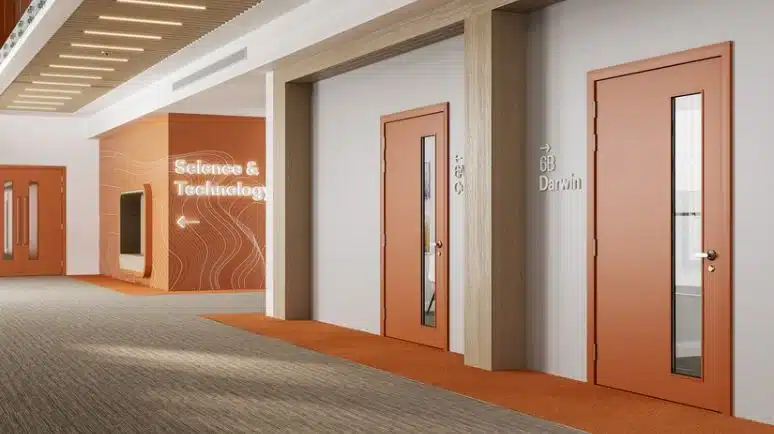
Doors tend to sit in the background of home design conversations. People talk about sofas, flooring, wall colors. Doors usually come last. And yet, once you notice them, you cannot unsee their impact. Over the last few years, modern laminate door design has quietly become the default choice in contemporary homes, not because it is trendy, but because it makes sense.
Laminate doors fit the way people live now. Homes are used hard. Layouts change. Styles evolve. Materials that demand attention or special care quickly become a burden. Laminates, by contrast, stay consistent. They do not ask for much. They simply hold up.
This shift is less about fashion and more about practicality catching up with design expectations.
What Makes Modern Laminate Door Design Popular
The appeal of modern laminate door design is not rooted in novelty. It comes from reliability. Homeowners want doors that look the same after five years as they did on day one. Laminates offer that predictability.
Natural wood has its charm, but it also comes with variation. Grain changes. Color shifts. For some homes, that character works. For most modern interiors, it introduces inconsistency. Laminates remove that uncertainty.
Another reason modern laminate door design continues to gain popularity is how easily it fits into different spaces. Apartments, villas, renovated homes, rental properties. The same finish works across all of them without looking forced.
There is also a practical side that rarely gets discussed. Laminates tolerate daily use. Fingerprints, light scratches, minor knocks. They handle it without demanding repairs or refinishing.
Also read: Future-Ready Furniture Design Ideas for Homes That Love Style & Functionality
Main Door Laminate Design Ideas for Today’s Homes
The entrance door does more than close a space. It sets expectations. A well-chosen main door laminate design signals restraint, not excess.
Wood-finish laminates remain a common choice, but the preference has shifted toward quieter tones. Nothing glossy. Nothing overly patterned. Just enough texture to avoid looking flat.
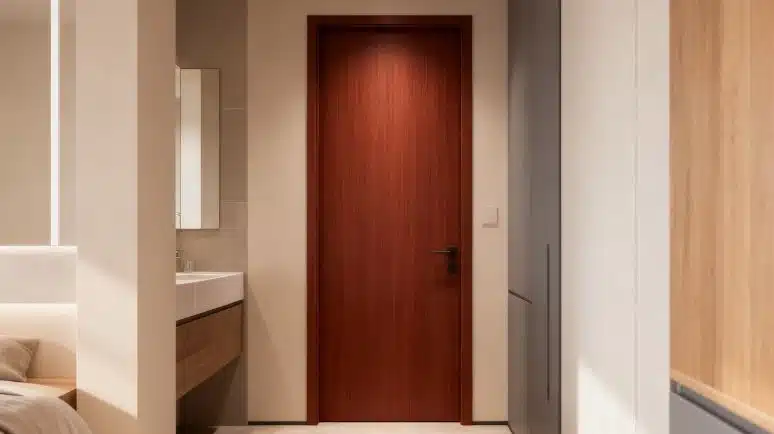
Some homeowners opt for darker finishes to create contrast against light exteriors. When done carefully, this adds definition without making the entrance feel heavy. This is where modern laminate door design works particularly well. It offers depth without unpredictability.
Design today is less about decoration and more about proportion. A door should feel like it belongs, not like it is performing.
New Main Door Laminate Design Trends to Watch
A new main door laminate design today often looks simpler than designs from even a few years ago. That is not accidental.
Neutral shades dominate because they age better. Warm greys, soft browns, and matte finishes blend into different architectural styles without demanding commitment to a single look.
Another noticeable trend is visual continuity. Doors are no longer treated as isolated elements. Finishes often echo nearby wall panels or exterior cladding. This makes the entrance feel intentional rather than inserted later.
Flat, uninterrupted surfaces are becoming more common. Heavy grooves and ornate patterns are quietly disappearing. In this context, modern laminate door design supports calm, uncluttered exteriors.
How Main Door Laminate Design Impacts Home Exteriors
The main door laminate is the one that influences the way a given home is viewed at the street. It is subtle, but it matters.
Slightly light laminates should be used to make homes smaller and more open. Darker colors are more weighty and can only be utilized well when the facade is spacious to accommodate the same. Scale is key.
One advantage of modern laminate door design is control. You know how the finish will look in different lighting conditions. That consistency helps maintain visual balance over time.
Exterior exposure also plays a role. Doors face sun, dust, and changing weather. Laminates designed for main doors retain their appearance longer, which helps the home look maintained rather than tired.
Modern Wardrobe Laminate Design vs Door Laminates
Laminates show up everywhere in a home, but they are not all doing the same job. A modern wardrobe laminate design is chosen mainly for how it looks indoors and how it behaves under artificial lighting. Door laminates, on the other hand, are expected to handle far more. They take knocks, get touched constantly, and in the case of entry doors, face the outside world every day.
That difference changes the way they are selected. Wardrobes usually lean toward lighter shades and smoother finishes, helping rooms feel brighter and less enclosed. Door laminates, especially at entrances, are picked with durability in mind before anything else.
Even with these differences, visual flow still matters. Many homes rely on related tones rather than exact matches, allowing wardrobes and doors to feel part of the same design language. When handled carefully, modern laminate door design reinforces that connection without pulling attention away from the rest of the interior.
Choosing the Right Main Door Laminate for Your Space
Selecting a laminate should start with context, not catalogues.
First, consider placement. A door exposed to sunlight or rain needs laminates designed for exterior conditions. Interior doors allow more flexibility.
Color choice should account for longevity. Neutral laminates adapt better to future changes. This is one reason modern laminate door design works well for long-term planning.
Texture is another consideration. Smooth finishes feel contemporary but show marks more easily. Light textures strike a practical balance.
Consistency across doors helps avoid visual noise. Repeating related finishes creates flow without repetition.
Why Modern Laminate Door Design Fits Contemporary Living
Modern homes are designed for ease. Materials are expected to perform quietly. In that environment, modern laminate door design fits naturally.
It allows interiors to change without friction. Furniture can be updated. Walls repainted. Layouts adjusted. The doors still work.
More importantly, laminates align with the modern preference for simplicity. Doors are no longer focal points. They frame spaces and step back.
That restraint is not accidental. It reflects how people want their homes to feel.
Final Thoughts
Doors do not need much attention, yet they make a lasting impression. The modern laminate door design promotes those contemporary homes that do not need a lot of effort through durability, controlled finishes, and visual restraint.
Laminate doors are applicable at the front door or within the house since the spaces are continuously being transformed. When carefully selected, they strengthen balance as opposed to destabilization.
The most effective decisions made in a home are usually the unspoken ones in the modern day homes.
FAQs
A. One reason modern laminate door design has become so common is simple reliability. These doors are made to handle daily use without changing much over time. They do not demand polishing or constant care, and they tend to look consistent even years later. For most homes, stability matters more than novelty.
A. Choosing a main door laminate design usually starts with observing the surroundings, not trends. Think about light, exposure, and scale. Dark finishes work well when there is space to balance them, while lighter laminates suit compact entrances. A main door laminate should feel like it belongs to the structure, not like an afterthought.
A. Yes, and this is where subtlety helps. A modern wardrobe laminate design does not need to match the door exactly. Related tones are usually enough. When finishes speak the same visual language, modern laminate door design blends naturally with interior storage without competing for attention.